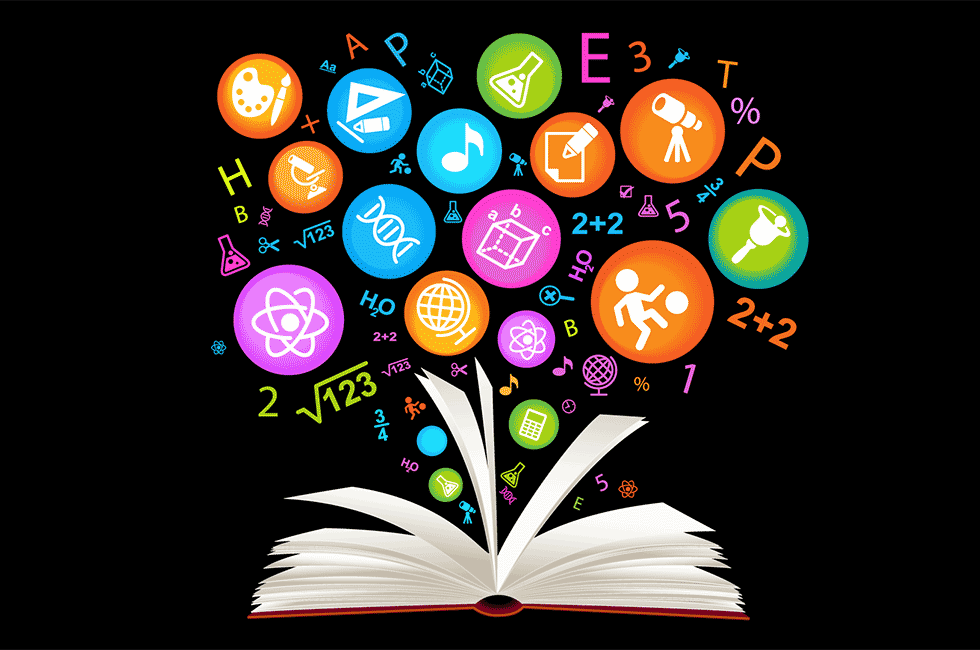
Interdisciplinary Approaches to Learning: Breaking Down Barriers Between Subjects
Traditional education models often compartmentalize learning into separate subjects, with little integration or overlap. However, interdisciplinary approaches to learning have emerged as a more holistic and effective way of understanding complex topics. Interdisciplinary learning encourages students to explore connections between different subjects, fostering creativity and critical thinking skills.
What is Interdisciplinary Learning?
Interdisciplinary learning involves the integration of multiple disciplines in order to gain a more comprehensive understanding of a particular topic. This approach acknowledges that real-world problems do not exist in isolation; rather, they require knowledge from a variety of fields to be solved effectively.
For example, consider climate change – it cannot be fully understood through any one discipline alone. To understand the issue comprehensively, we must draw upon knowledge from areas such as science, economics, politics, ethics and sociology. By bringing together various perspectives and ideas on this issue we can create better solutions than if we only relied on the insights from one area.
Interdisciplinary Approach vs Multidisciplinary Approach
It is essential to distinguish interdisciplinary approaches from multidisciplinary ones which are similar but fundamentally different methods for combining disciplines.
Multidisciplinary approaches involve studying various disciplines separately without necessarily seeking links between them. For instance, when studying an engineering problem related to mechanics or structures , mechanical engineers will study about mechanics while civil engineers learn about structures but both don’t integrate their knowledge until required by the project .
On the other hand interdisciplinary approaches are characterized by active efforts made towards integrating multiple disciplines . In our engineering example above instead of waiting for time when each engineer’s skillset will be needed , mechanical engineers can actively seek input from civil engineers at certain stages during design phase so as to build designs that meet structural requirements hence reducing need for costly revisions later in construction process .
Benefits of Interdisciplinary Learning
1) Encourages Critical Thinking Skills
When students are exposed to various ways of looking at a problem, they are forced to think more critically and creatively. They learn how to connect ideas across different fields of study, making them better problem-solvers in the future.
2) Enhances Learning Retention
Interdisciplinary learning makes it easier for students to remember what they have learned as opposed to when subjects are taught separately. This is because it provides context and application which improves memory retention.
3) Provides Real-world Context
By studying real-world problems from multiple perspectives, students can gain valuable insights into how different disciplines work together in solving complex issues. This not only prepares them for the workforce but also allows them to make informed decisions about their place in society.
4) Encourages Collaboration
Interdisciplinary learning encourages collaboration among students who come from diverse academic backgrounds . Through this approach ,they learn how to communicate their ideas clearly with others who may have different views or ways of expressing themselves . This helps build teamwork skills that will be needed throughout life .
Examples of Interdisciplinary Learning
1) STEAM Education (Science, Technology, Engineering, Arts and Mathematics)
STEAM education programs are designed specifically for interdisciplinary learning. These programs encourage students to use creativity and critical thinking skills while exploring connections between science, technology engineering arts and mathematics subjects .
One example of a STEAM program is “Artbots” where stduents design robots using basic electronic components such as motors , batteries , switches etc but also add artistic features like color or shape that appeal visually.
2) Environmental Studies Programs
Environmental studies programs typically incorporate knowledge from several areas including ecology , chemistry , geology social science etc.. Students explore environmental issues through hands-on experiences like field trips or lab experiments which help provide contextual understanding on these topics .
3) Global Issues Coursework
Global issues courses offer an excellent opportunity for interdisciplinary learning due to their inherently complex nature . These courses focus on topics like global poverty reduction strategies , human rights violations around world etc.. Here again students use multiple perspectives to understand complex social, economic and political issues.
In conclusion, interdisciplinary approaches are key to breaking down the barriers between subjects in traditional education models. They provide a more comprehensive understanding of complex topics by encouraging critical thinking skills, enhancing learning retention, providing real-world context and promoting collaboration. The benefits of interdisciplinary learning extend beyond academic settings and prepare students for life outside school as well. By incorporating interdisciplinary approaches into our educational systems we can create better problem-solvers who will be equipped to tackle the challenges of our ever-changing world.
 Alternative Amie
Leave a comment