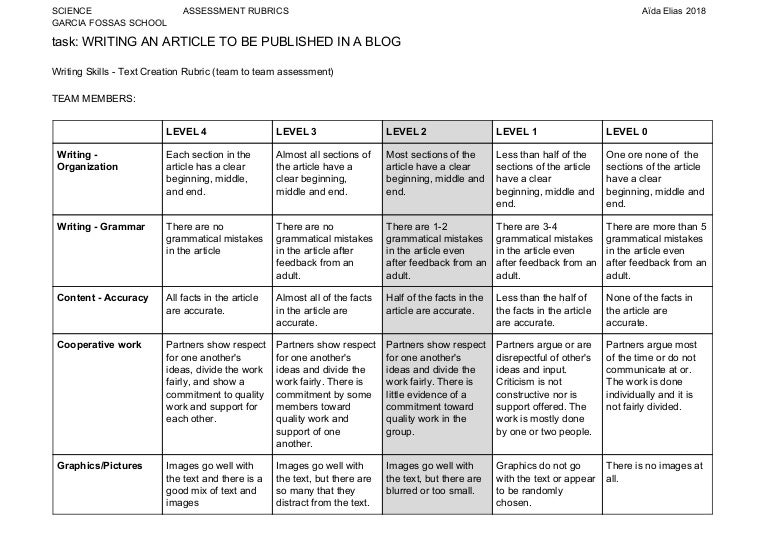
Rubrics are a popular tool for educators to use in assessing student work. They are a scoring guide that teachers use to evaluate student performance based on specific criteria. Rubrics are designed to make grading more objective, consistent, and transparent, as they set clear expectations for what students need to do to meet specific learning goals.
There are many benefits of using rubrics in the classroom. Firstly, they provide clarity for both teachers and students. The teacher knows exactly what is expected from the student and can grade accordingly. Students also know exactly what is required of them and can aim towards meeting these expectations.
Secondly, rubrics offer consistency in grading across different assignments or classes. With a well-designed rubric, each assignment can be graded objectively using the same criteria regardless of who grades it. This helps eliminate any potential biases or subjectivity that may come into play when grading without a standard measurement for success.
Thirdly, rubrics foster critical thinking skills in students by requiring them to reflect upon their work and self-assess against predetermined criteria. This encourages students to become more engaged with their own learning process which ultimately leads to improved academic outcomes.
Fourthly, rubrics serve as an excellent communication tool between teachers and students (and even parents). By providing detailed feedback on what was done well and where improvements could be made, everyone involved gains valuable insight into where efforts should be focused moving forward.
Finally, using rubrics saves time overall because they reduce the amount of time spent grading each individual assignment while still providing high-quality feedback that drives meaningful improvement.
When creating a good rubric there are several things you should keep in mind:
1) Start with clear objectives: Define your learning objectives clearly so that your assessment standards align with your goals for student learning.
2) Determine criteria: Decide on the key components you want your learners’ work assessed on.
3) Set standards: Establish clear levels of achievement corresponding with each criterion – this will help make the rubric more objective.
4) Use clear language: Avoid using jargon or technical terms that may be confusing to your learners.
5) Keep it simple: A good rubric is easy to understand and use. Therefore, keep it as simple as possible.
Rubrics can be used for a wide range of assignments, from essays to group projects and presentations. However, it’s important to note that while rubrics can provide an objective measure of student performance, they should not be relied on solely as a method of assessment.
For example, subjective factors such as creativity or originality are hard to capture within a rubric format. This means that teachers should also use other methods such as class discussions or peer reviews alongside the rubric in order to get a well-rounded picture of each student’s work.
Another potential drawback is that students may become overly focused on meeting the criteria in the rubric and miss out on opportunities for deeper learning or creative exploration. Teachers need to balance this risk by encouraging their learners’ curiosity and critical thinking skills beyond what’s specified in the grading criteria.
In conclusion, Rubrics are valuable tools for assessing student work and promoting consistent grading practices across different assignments or classes. They offer many benefits including clarity for both teachers and students; consistency in grading; fostering critical thinking skills; effective communication between all parties involved; saving time overall by reducing individual assignment-grading time while still providing high-quality feedback towards meaningful improvement.
However, when creating a good Rubric one needs to follow certain guidelines like starting with clear objectives aligned with learning goals; determining key components & criteria for assessing learner work objectively according to set standards; using clear & simple language avoiding jargon which could confuse students etc. It’s important not rely only on Rubrics but also complement them with other methods like class discussions along with peer reviews so we don’t overlook subjective factors such as creativity or originality which cannot always be captured within a rubric format. Lastly, teachers need to balance the risk of students becoming too focused on meeting criteria by encouraging curiosity and critical thinking beyond what’s specified in grading criteria.
 Alternative Amie
Leave a comment