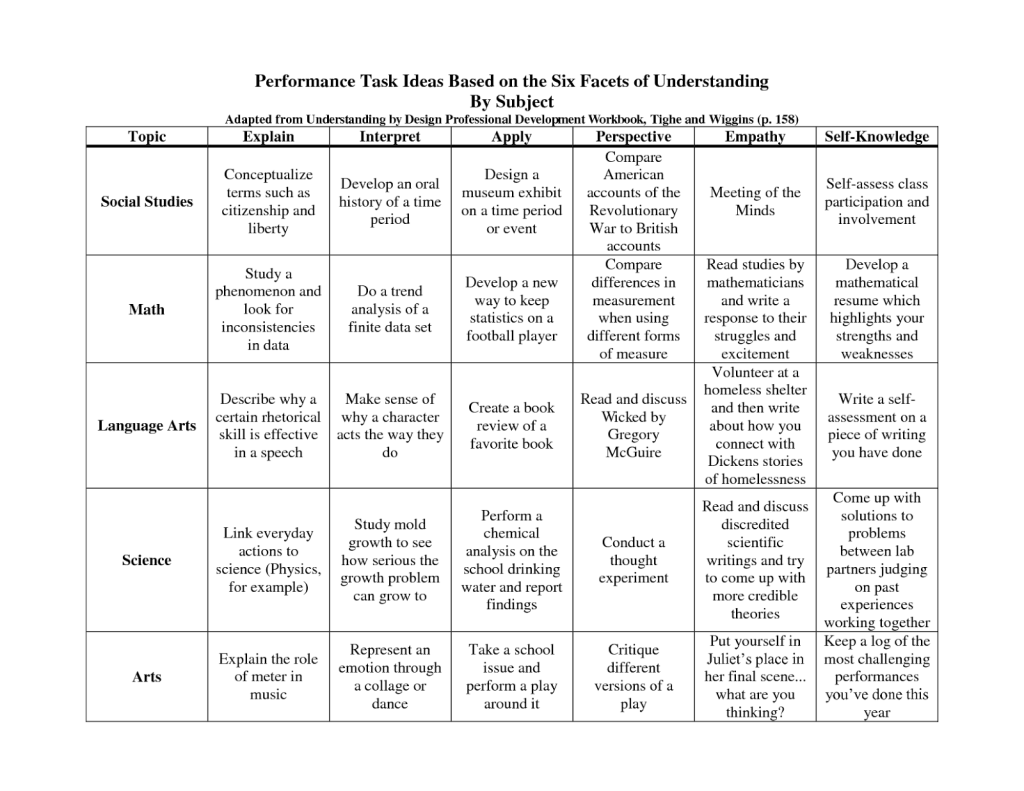
Performance tasks are a type of assessment that is becoming increasingly popular in alternative schooling and education. Unlike traditional tests, performance tasks require students to demonstrate their knowledge by completing real-world projects or tasks that simulate what they might encounter in the workforce.
What Are Performance Tasks?
Performance tasks are assessments that measure a student’s ability to apply their knowledge and skills to real-world problems. They require students to use critical thinking, problem-solving, and communication skills as they complete complex assignments or projects. Performance tasks can take many forms, including writing assignments, presentations, experiments, simulations, and more.
The goal of performance tasks is to assess a student’s ability to use their knowledge in practical situations. Since these types of assessments require students to think critically and creatively while working independently or collaboratively with others, they provide a more accurate picture of how well they will perform outside the classroom.
Why Use Performance Tasks?
There are several reasons why educators choose to use performance tasks instead of traditional tests:
1. Authentic Assessment: Performance tasks provide an authentic assessment of a student’s abilities because they simulate real-world scenarios that students may encounter after graduation.
2. Deeper Learning: Performance tasks promote deeper learning by requiring students to apply their knowledge in new and challenging ways. This helps them develop critical thinking skills that will serve them well throughout their lives.
3. Improved Retention: Students who participate in performance task activities often retain information better than those who only study for exams since they’re using the information in relevant contexts.
4. Engaging Activities: Many performance task activities involve hands-on work or creative projects which enhances engagement among learners.
How Do Teachers Create Effective Performance Tasks?
Creating effective performance task activities requires careful planning and preparation on behalf of teachers. Here are some key steps teachers should consider when creating these types of assessments:
1) Determine Learning Objectives: Before designing any activity or project it is important for educators first identify specific learning objectives related to the curriculum. These objectives should be measurable and clear so that students know what they are expected to learn.
2) Choose Relevant Topics: The topics chosen for performance tasks should be relevant and meaningful to the learners, so that they can connect with it in a deeper way.
3) Design Tasks that Foster Collaboration: Performance tasks require collaboration among students as well as between teachers and students. Teachers must design activities that foster communication and teamwork among students.
4) Provide Clear Instructions & Rubrics: Clear instructions must be provided along with rubrics to ensure that everyone is on the same page about expectations of the project.
5) Use Technology Wisely: Even if you don’t have access to high-tech equipment, there are still plenty of online tools available for designing effective performance task activities such as Google Slides or Canva, which will help you create engaging graphics or visual aids for your lessons.
Examples of Effective Performance Task Activities
Here are some examples of effective performance task activities:
1. Science Experiment Projects: Students conduct science experiments using scientific methods such as hypothesis testing, data collection and analysis while recording their findings in a lab report format.
2. Debate Presentations: Students engage in formal debates over controversial topics where they research each side’s claims before presenting an argument based on evidence gathered from various sources like books or articles supporting their position.
3. Service Learning Projects: Students identify community needs then work together to develop solutions by creating service projects aimed at meeting specific needs within their communities such as cleaning up parks or helping out at food banks etc.
4. Digital Storytelling Projects : Using technology tools like Animoto or Adobe Spark Video, let students create multimedia projects including video presentations narrated by themselves showcasing their understanding of certain concepts learned during class time.
Final Thoughts
Performance tasks offer educators unique opportunities for assessing student learning beyond traditional tests – providing them with rich experiences through hands-on activities making learning more meaningful and applicable to real-world situations.The benefits of using performance tasks are clear, but it’s essential that teachers take the time to create well-designed activities that align with learning objectives and foster collaboration among students. By doing so, they can help their learners build a deeper understanding of the concepts they’re studying while developing critical thinking skills that will serve them well in school and beyond.
 Alternative Amie
Leave a comment