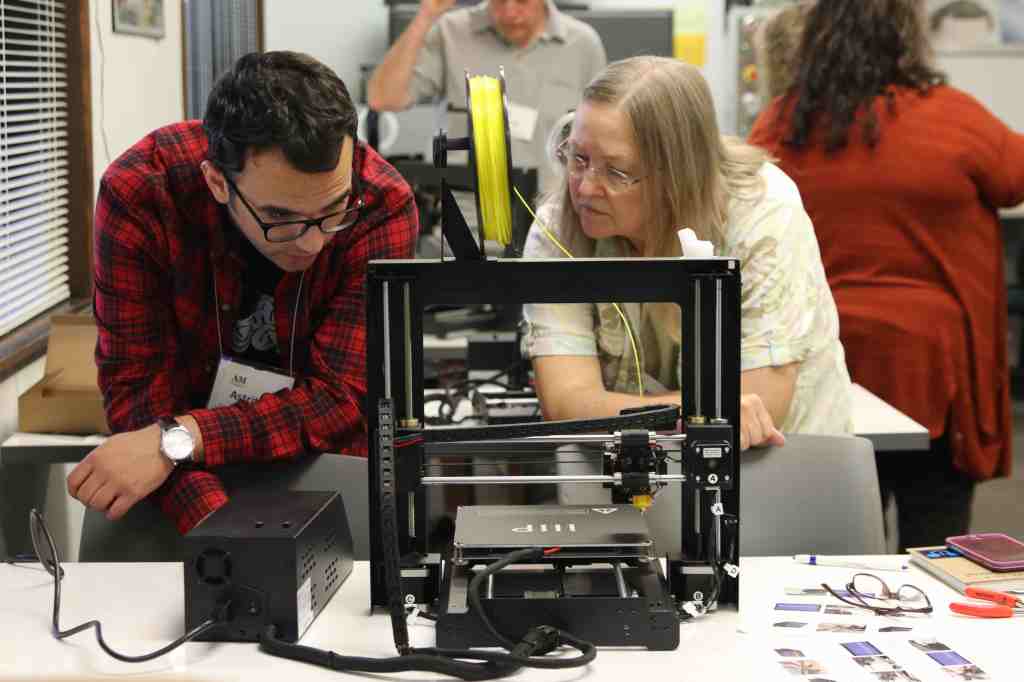
3D Printing: A Revolutionary Tool for Alternative Education
In recent years, 3D printing has emerged as a powerful and versatile tool that can be used in various fields, including education. With its ability to create physical objects from digital designs, 3D printing offers an innovative way to engage students and enhance their understanding of complex concepts. In this post, we’ll explore some of the ways that 3D printing can be used in alternative schooling and education.
1. Hands-on Learning
One of the most significant benefits of using 3D printing in education is that it provides students with a hands-on learning experience. Instead of just reading about abstract concepts or looking at pictures in a textbook, students can design and print their own models to get a better understanding of how things work.
For example, science teachers might use 3D printing to create anatomically correct models of the human body for students to study. This approach allows them to see internal organs and structures in three dimensions instead of just looking at flat images on paper.
Similarly, engineering teachers might use 3D printers to create prototypes or scaled-down versions of machines or structures they are studying. This approach helps students understand how these devices work by allowing them to see each component up close.
2. Enhancing Creativity
Another benefit offered by 3D printing is that it enhances creativity among students. By giving them access to tools for designing and creating objects, educators can encourage them to think outside the box and come up with new ideas.
This is particularly useful when teaching subjects like art or design where creativity plays a crucial role. Students who have access to 3D printers can experiment with different shapes, sizes, colors, materials until they find something that works best for their project.
Moreover, this process also gives students practice working within specific parameters – such as size constraints – while encouraging experimentation with new ideas or techniques.
By encouraging creativity through hands-on learning, 3D printing can help students develop new skills and ways of thinking that will be useful throughout their lives.
3. Promoting Collaboration
A third benefit offered by 3D printing in education is its ability to promote collaboration among students. By working together on design projects, students learn how to share ideas and work together towards a common goal.
This collaborative approach can be particularly beneficial for alternative schooling environments where classes might consist of mixed-aged or multi-level groups. In these cases, 3D printing provides an opportunity for older students to mentor younger ones while also learning from them in return.
Moreover, this process helps promote communication among students and improves socialization skills, which are essential for success both inside and outside the classroom.
4. Encouraging Entrepreneurship
Finally, another significant benefit of using 3D printing in education is that it encourages entrepreneurship among students who have access to these tools. With the rise of e-commerce platforms like Etsy or Amazon handmade, it’s now easier than ever for young people to start their own businesses selling custom-made products online.
By teaching them how to use 3D printers effectively, educators can provide their students with valuable skills they can use later in life – whether they decide to pursue a career in manufacturing or start their venture selling bespoke products.
Moreover, this process helps instill an entrepreneurial spirit within young people that can inspire them to take risks and pursue their dreams even when faced with difficult challenges along the way.
Conclusion
In conclusion, 3D printing offers a range of benefits that make it an excellent tool for alternative schooling environments looking to enhance creativity while providing hands-on learning experiences that promote collaboration among peers. Whether used for science experiments or art projects alike—its versatility makes it a game-changing technology capable of revolutionizing the way we teach our children today!
 Alternative Amie
Leave a comment