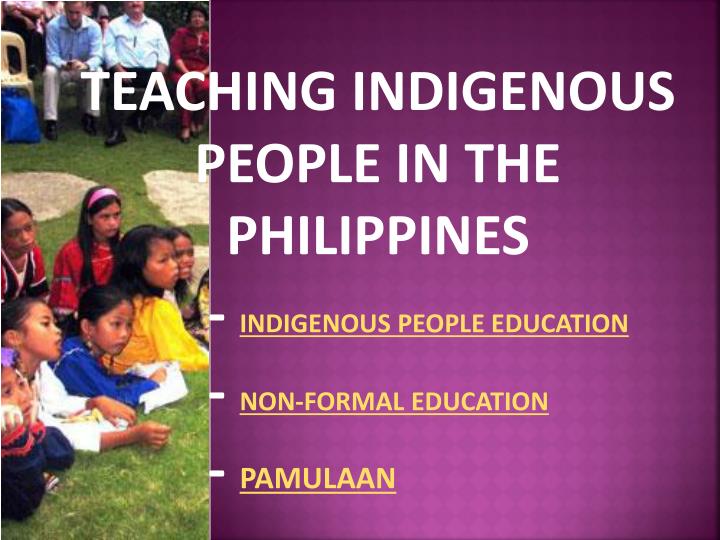
Indigenous Education Systems: A Look at Traditional Methods
Education is an essential part of any society, and indigenous communities have their unique ways of imparting knowledge to their children. These methods are distinct from mainstream education systems, and they emphasize holistic learning that encompasses the physical, spiritual, emotional, and intellectual development of individuals.
Indigenous education systems are rooted in the community’s traditions and values. They seek to preserve indigenous cultures by passing on knowledge from one generation to another through storytelling, observation, and practical demonstrations.
One key aspect of indigenous education is that it prioritizes experiential learning over theoretical knowledge. For instance, children learn about plants’ medicinal properties by observing how elders use them in healing rituals.
Another feature of these educational systems is a strong emphasis on community participation. Elders play a crucial role in educating young people about their culture and traditions. They act as mentors who pass on traditional skills like hunting or fishing while also providing guidance on how best to navigate life’s challenges.
In many indigenous communities, there is no separation between formal schooling and everyday life. Learning occurs everywhere – at home, during ceremonies or festivals – making it an ongoing process rather than something confined to specific times or places.
Language plays a vital role in Indigenous education because it fosters cultural continuity by preserving oral traditions such as stories or songs that communicate important messages about history or social norms.
Despite the resilience of these traditional methods over time, Indigenous communities face challenges maintaining their educational practices due to factors such as urbanization changing lifestyles or loss of language proficiency among younger generations.
In conclusion, Indigenous education systems offer alternative approaches to teaching that prioritize holistic learning while celebrating cultural identity through community engagement practices like storytelling observations mentoring language preservation etcetera Despite facing several threats today these methods remain important for both present-day learners seeking diverse perspectives in education as well as future generations interested in preserving historical heritage.
 Alternative Amie
Leave a comment