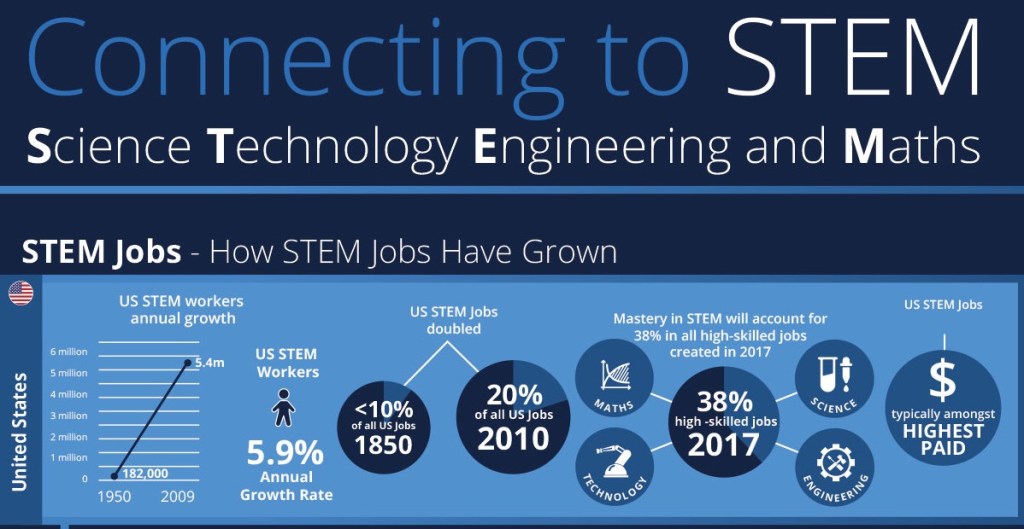
Data analysis and visualization are two essential components of STEM education. These techniques enable students to explore complex mathematical and scientific concepts, understand real-world problems, and develop the skills necessary to succeed in a rapidly changing job market.
Data analysis involves collecting, interpreting, and presenting data in meaningful ways. Students learn how to use statistical tools such as histograms, scatter plots, and regression analyses to identify trends and patterns in large datasets. They also practice critical thinking by evaluating the quality of their data sources and drawing conclusions based on evidence.
Visualization is equally important because it allows students to communicate their findings in compelling ways. Graphs, charts, maps, and animations can help them convey complex information quickly and effectively. Visualization tools also encourage creativity by allowing students to experiment with different representations of their data.
Together, these techniques form the foundation for a new generation of data-driven problem solvers who will be well-equipped to tackle some of society’s biggest challenges.
In STEM education programs across the country, teachers are integrating data analysis and visualization into their curricula at all grade levels. Some schools have even developed specialized courses or programs focused entirely on these topics.
One example is the Data Science Academy at Thomas Jefferson High School for Science & Technology in Virginia. This program offers students a rigorous four-year curriculum that includes courses in statistics, machine learning, computer programming, ethics, and communication.
Another example is Project-Based Learning (PBL). This approach emphasizes hands-on activities that require students to apply critical thinking skills while working collaboratively on real-world projects. PBL assignments often involve collecting data from various sources such as surveys or experiments before analyzing it using appropriate visualizations like graphs or charts.
The benefits of incorporating data analysis and visualization into STEM education are clear: increased engagement among students; development of crucial analytical thinking skills; preparation for future careers where big-data analytics play an important role; improved understanding of complex scientific concepts; better communication through visual representation; enhanced creativity and critical thinking skills.
In conclusion, data analysis and visualization are essential components of STEM education. They enable students to explore complex concepts in an engaging and meaningful way while developing the analytical thinking skills that will serve them well throughout their lives. As STEM fields continue to grow and evolve, it is vital that we equip our students with the tools they need to succeed in this exciting new landscape.
 Alternative Amie
Leave a comment