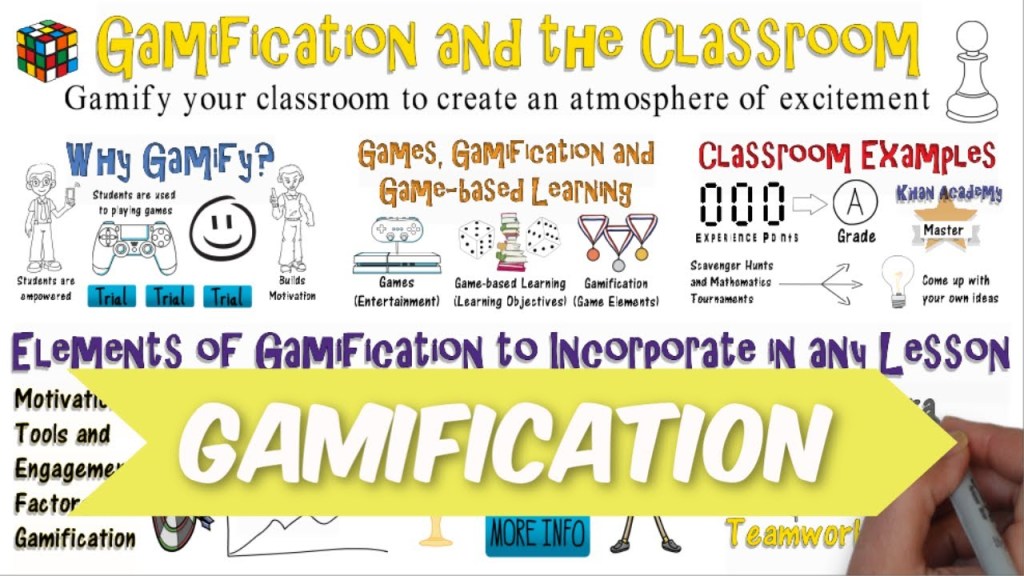
Gamification in Education: Making Learning Fun and Engaging
Learning through play has been a concept known for centuries. It is an idea that children learn better when they are engaged in activities that interest them. As technology advances, gamification has become a popular trend in the education industry. Gamification refers to integrating game elements into educational content or tasks to make learning more interactive and enjoyable.
While some educators may argue that games can be distracting, studies have shown that gamified learning enhances engagement, motivation, and retention of knowledge among students of all ages. In this article, we will explore the benefits of gamification in education and how it can transform the way we teach.
Increased Engagement
Engagement is one of the biggest challenges facing teachers today. Students are easily distracted by social media, texting, or simply daydreaming during class time. Traditional teaching methods like lectures or reading assignments often fail to capture their attention.
Gamification offers a solution by providing learners with an immersive experience that makes them want to participate actively in activities related to their learning objectives. Game elements such as points systems, badges, leaderboards create a sense of competition among students while also motivating them to achieve higher scores or levels.
One example where gamified learning was successful is Duolingo – A language-learning app that provides users with bite-sized lessons presented as mini-games rather than long-winded explanations on grammar rules and vocabulary lists.
Personalization
Every student learns differently; some prefer visual aids while others need hands-on activities or audio input. In traditional classrooms where teachers have limited time and resources personalizing instruction according to diverse needs can be challenging.
However, with gamified learning platforms personalized instruction becomes possible due to its adaptive nature which enables it to adjust difficulty levels based on each student’s performance level quickly – making sure no child feels left behind nor bored out from too simple tasks assigned beyond their level of understanding.
Instant Feedback
Feedback plays a crucial role in learning. It helps students understand their strengths and weaknesses, keeping them motivated to learn and improve. In traditional classrooms, feedback is often delayed due to the large number of students or limited time.
Gamification offers instant feedback by providing learners with immediate responses in the form of points, badges, or rewards. Students can track their progress easily and receive real-time assessment on how they are doing.
Moreover, gamified platforms like Kahoot! provide teachers with real-time data on student performance which enables them to provide additional support where necessary or adjust lesson plans according to areas that need improvement.
Improved Retention
Retention refers to an individual’s ability to remember information over a long period. Traditional teaching methods rely heavily on memorization techniques that do not encourage critical thinking nor creativity among students – leading many pupils’ forgetting most of what they learned after exams have been taken.
Gamification improves retention rates by creating scenarios where learners must apply knowledge or skills acquired through gameplay – making it easier for them to retain this information and recall it when needed.
Collaboration
Collaboration has become one of the essential skills required in today’s workforce. Gamified learning platforms promote collaboration by allowing students to work together towards a common goal while competing against other groups within the class setting – promoting teamwork spirit while also enhancing critical thinking abilities.
Additionally, games like Minecraft Education Edition enable players (students) from different parts of the world to collaborate virtually while working on solving problems related to science, technology engineering arts and mathematics (STEAM). This feature promotes cross-cultural exchange as well as enhances communication abilities among learners from diverse backgrounds.
Conclusion
The incorporation of gamification into education has transformed traditional teaching methods drastically. Gamified learning allows educators worldwide access more engaging ways for delivering content resulting in better engagement levels amongst students than before!
With its benefits ranging from increased engagement levels through personalization features; Instant Feedbacks that enhance retention rates; improved collaborative opportunities amongst learners from diverse backgrounds – gamification has proven to be an effective tool for making learning more fun and engaging.
 Alternative Amie
Leave a comment