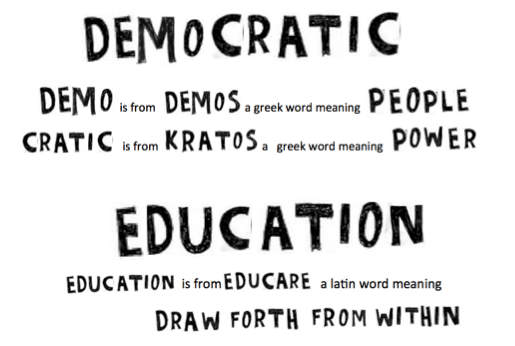
Democratic Schools: A Historical Overview
Democracy is one of the founding principles of modern society, and it has greatly influenced education. The idea that students should have a voice in their own education, instead of being told what to learn and how to learn it by authoritarian teachers or administrators, has been around for over a century. Democratic schools are institutions that embody this principle fully, allowing students to take control of their learning processes.
The first democratic school was founded in 1921 in Summerhill, England by A.S. Neill. Neill believed that children should be free to pursue their interests without external pressure from adults. He encouraged his students to participate in decision-making about everything from curriculum development to discipline policies. At Summerhill School, students were free to attend classes if they wanted or spend time playing outside if they preferred.
The democratic school movement gained traction in the United States during the 1960s and 1970s as part of the larger progressive education movement. This was a time when young people were questioning authority and demanding more autonomy for themselves both inside and outside traditional educational settings.
One influential figure during this period was Paulo Freire who wrote extensively on critical pedagogy which argued that teaching should not just impart knowledge but also challenge social structures with unjust power dynamics through dialogue between teachers/students/parents/administrators/community members/etcetera so everyone can understand each other’s experiences better before making decisions together.
In recent years, there has been renewed interest in democratic schools as alternative models for educating young people outside traditional systems that may stifle creativity or fail to meet individual needs adequately. Many parents today are looking for educational opportunities where their children can learn at their own pace without feeling pressured into conformity.
In conclusion, democratic schools have been an important part of modern education since its inception nearly a century ago. They offer an alternative model where students are empowered to take control of their learning experience while still receiving guidance from experienced educators. As society continues to evolve, democratic schools will likely continue to be a valuable option for parents and students who seek more autonomy in their education.
 Alternative Amie
Leave a comment