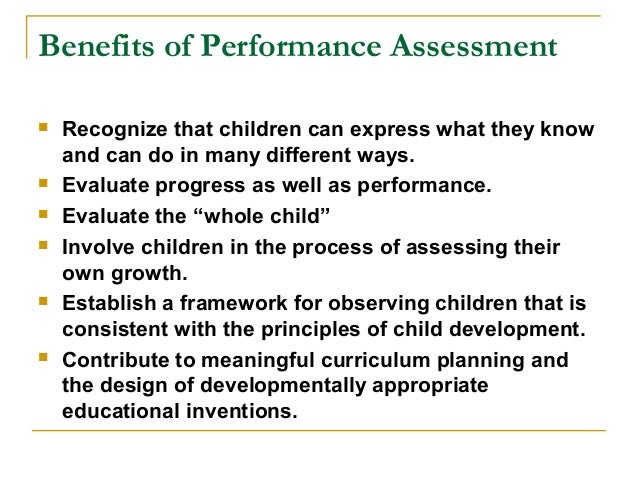
Authentic assessment is a type of evaluation that focuses on real-world skills and knowledge. It’s an approach to testing and grading that emphasizes the application of learning in practical settings, rather than simply regurgitating information from textbooks or lectures. Authentic assessment can take many forms, including projects, portfolios, presentations, simulations, and more.
One of the key benefits of authentic assessment is that it provides a more accurate picture of what students have actually learned. Traditional tests often focus on memorization and recall, which may not reflect students’ true understanding or abilities. By contrast, authentic assessments require students to demonstrate their knowledge through real-world tasks that are relevant to their lives and interests.
Another advantage of authentic assessment is that it promotes deeper learning. When students are asked to apply their knowledge in meaningful ways, they must engage in critical thinking and problem-solving. This helps them develop higher-order cognitive skills such as analysis, synthesis, evaluation, and creativity.
Authentic assessment also encourages collaboration and communication among students. In many cases, projects or presentations require teamwork or peer feedback. This fosters social-emotional development as well as academic growth.
Moreover, authentic assessment can help motivate learners by giving them a sense of ownership over their work. When they have choices about what topics to study or how to present their findings, they become more invested in the process and outcomes.
However, there are some challenges associated with implementing authentic assessment effectively. One issue is ensuring consistency across different projects or assignments; without clear criteria for evaluation or rubrics outlining expectations for student performance it may be difficult for teachers to know whether all students are meeting expectations uniformly.
Additionally , time constraints can be limiting when using this type of instruction since detailed feedback takes longer than just filling out multiple choice answer keys .
Another challenge involves providing enough support for learners who might struggle with certain aspects of an assignment (e.g., technology skills). Teachers need to provide scaffolding for these situations so that students can still complete assignments successfully.
Despite these challenges, many educators and schools are adopting authentic assessment as a way to enhance student learning. By focusing on real-world skills and knowledge, this approach can help prepare students for success in college, career, and life beyond the classroom. Authentic assessment is also beneficial for teachers who want to assess their own teaching methods or curriculum effectiveness by seeing how well students apply concepts they have learned in class in real-world contexts.
In conclusion, authentic assessment is a powerful tool that supports deep learning , collaboration , communication and self motivation . It has become increasingly popular among educators who seek to provide their learners with relevant experiences that will better prepare them for the future. While it may require more planning time upfront than traditional assessments, the benefits of using authentic assessment far outweigh any potential drawbacks.
 Alternative Amie
Leave a comment