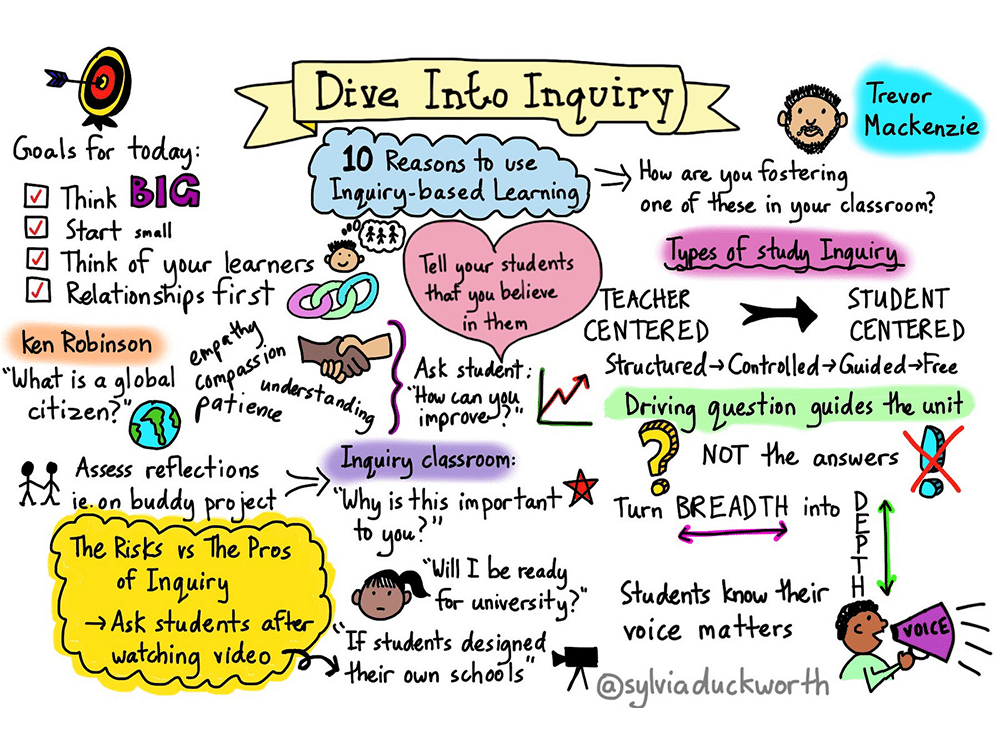
Inquiry-Based Learning: A Powerful Alternative Approach to Education
Inquiry-based learning, or IBL, is an approach to education that focuses on student-led investigation and exploration. Rather than simply being passive recipients of information, students are encouraged to ask questions, seek answers, and engage in critical thinking and problem-solving. This method has been gaining popularity in recent years as an alternative to traditional lecture-style teaching.
The roots of inquiry-based learning can be traced back to the work of philosophers such as Socrates and John Dewey who believed that education should not just impart knowledge but also cultivate curiosity, creativity, and independent thinking skills. In this sense, inquiry-based learning aligns with the constructivist theory of learning which posits that learners actively construct their own understanding of the world based on their experiences.
So how does inquiry-based learning work in practice? Let’s take a closer look at some key features:
1. Student-driven
One of the defining characteristics of IBL is that it puts students in charge of their own learning. Teachers act as facilitators rather than lecturers or authority figures who dispense information from on high. Students are given the freedom to choose topics they’re interested in exploring further and to design their own research questions.
This element makes IBL an excellent way for educators to personalize instruction for each student’s strengths and interests.
2. Emphasis on asking questions
Another key feature is a focus on questioning rather than answering. Instead of memorizing facts or regurgitating what they’ve been told by teachers or textbooks, students develop skills like research methodology by creating thoughtful inquiries about real-world problems or phenomena.
Teachers often use open-ended prompts such as “Why do you think…?” “What would happen if…?” or “How might we solve…?” These types of prompts require higher-order thinking skills such as analysis, synthesis, evaluation which are essential for success beyond school walls.
3. Collaboration/critical thinking
Inquiry-based learning is often done in small groups, encouraging students to engage in group problem-solving and collaboration. This approach helps develop essential skills like communication, teamwork, and critical thinking.
The ‘give-and-take’ nature of inquiry-based learning means that learners have the chance to test out their ideas with peers, get feedback on their work, and learn from each other’s strengths.
4. Authentic assessments
Rather than relying on multiple-choice exams or standardized tests as a measure of student progress, assessment in IBL often involves more authentic measures such as project presentations or research papers. These tasks allow students to demonstrate not only their knowledge but also their creativity and critical thinking skills.
Authentic assessments are more closely aligned with real-life situations where problem-solving skills are required rather than memorization abilities alone. It also prepares them for higher education or job opportunities which might require them to utilize these same skill sets.
5. Self-reflection
IBL encourages self-reflection by having students evaluate their own learning processes throughout the course of a project or assignment. Students reflect on how they approached the problem at hand; what worked well for them; what didn’t go so well; and what they could do differently next time to improve outcomes.
This process of self-evaluation builds metacognitive skills which enable learners to better understand how they think and learn best – an important aspect beyond schooling years too!
Benefits of Inquiry-Based Learning
There are several benefits associated with using inquiry-based learning methods:
1. Increased engagement: When students take ownership of their learning process, they become more invested in it emotionally leading to increased engagement levels among learners.
2. Improved retention: By focusing on questioning rather than answering outright questions, inquiry-based approaches help create deeper connections between new information learned and existing knowledge already possessed making information easier to remember over time.
3. Develops independent thinking: Through IBL initiative processes students gain independence through having control over their own topic choices and the pace of their learning.
4. Encourages collaboration: In IBL, learners work together to solve problems or answer questions, fostering collaboration amongst peers which is an essential skill in adulthood too.
Conclusion
Inquiry-based learning can be a powerful alternative approach to education that encourages students to think critically, learn independently and develop skills needed for success beyond school. While it may require additional planning and preparation by teachers, this type of teaching method has been shown to increase engagement levels among students while also promoting deeper levels of understanding about complex topics.
With so many benefits associated with inquiry-based learning approaches, it’s no wonder that more educators are turning towards this exciting way of teaching as a means to provide effective instruction that truly engages learners in meaningful ways!
 Alternative Amie
Leave a comment