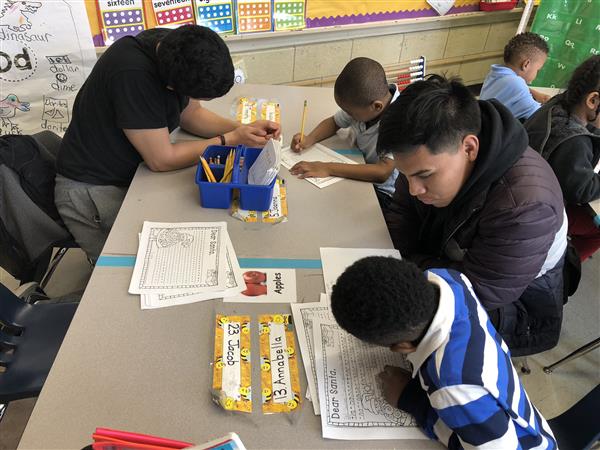
Cross-Age Tutoring and Mentoring Programs: A Look at the Benefits
Cross-age tutoring and mentoring programs have become increasingly popular in alternative schooling and education. These programs pair older students with younger students to provide academic support, social-emotional learning, and positive role modeling. In this post, we will explore the benefits of cross-age tutoring and mentoring programs.
👉 Check it out: Shop Tactical Flashlight on Amazon
Improved Academic Performance
One of the most significant advantages of cross-age tutoring is its impact on academic performance. Studies show that when older students tutor or mentor younger ones, it can lead to improved reading skills, comprehension levels, math abilities, and overall grades (Morrow & Young-Lawrence 2012). The peer-to-peer interaction allows for more personalized attention than what a teacher could provide in a classroom setting.
👉 Check it out: Shop Hiking Boots on Amazon
Increased Self-Confidence
Another benefit is an increase in self-confidence for both the tutor/mentor and the student being tutored/mentored. For young children who may struggle with certain subjects or lack confidence in their abilities, having an older peer serve as a role model can boost their self-esteem (Bramwell-Dicks et al., 2010). Similarly, tutors/mentors often feel more confident in their own knowledge after successfully teaching someone else.
Positive Social-Emotional Learning
Cross-age tutoring also provides opportunities for positive social-emotional learning experiences. By building relationships across age groups through regular interactions such as shared reading times or engaging in activities together, children learn valuable communication skills like listening actively and respectfully responding to others’ perspectives (Cohen et al., 2018). Additionally, these connections foster feelings of belongingness among students who may not normally interact with each other during school hours.
Leadership Development
Cross-age tutoring programs offer leadership development opportunities for older students by providing them with responsibilities beyond their typical coursework demands. They are given the chance to be mentors/tutors which requires planning lessons or activities that are appropriate according to the younger student’s needs or interests, monitoring progress and adjusting strategies to ensure success, and giving feedback (Topping & Ehly, 2013). These experiences can cultivate leadership skills like communication, organization, problem-solving which will be valuable in future academic and professional endeavors.
Improved Classroom Dynamics
Finally, cross-age tutoring programs can improve classroom dynamics. It creates a positive environment where students feel supported by each other instead of competing against one another. Older students serve as role models for younger ones who may look up to them. They also act as peer advocates and empower their peers to take ownership of their learning journey while encouraging others to do the same.
Conclusion
Cross-age tutoring is a powerful tool that provides numerous benefits for both tutors/mentors and the students being tutored/mentored. This program has been proven effective in improving academic performance, increasing self-confidence among participants, promoting social-emotional learning opportunities while developing leadership skills at the same time. Additionally, it fosters a more collaborative classroom culture that promotes mutual support rather than competition between students.
If you are looking for ways to enhance your alternative school’s educational experience or want to help your child perform better academically while building meaningful relationships with older peers simultaneously then cross-age tutoring might be just what you need!
🛒 Recommended Products
As an Amazon Associate, we earn from qualifying purchases.
Disclosure: This post contains Amazon affiliate links. As an Amazon Associate, we earn from qualifying purchases at no additional cost to you.
 Alternative Amie
Leave a comment