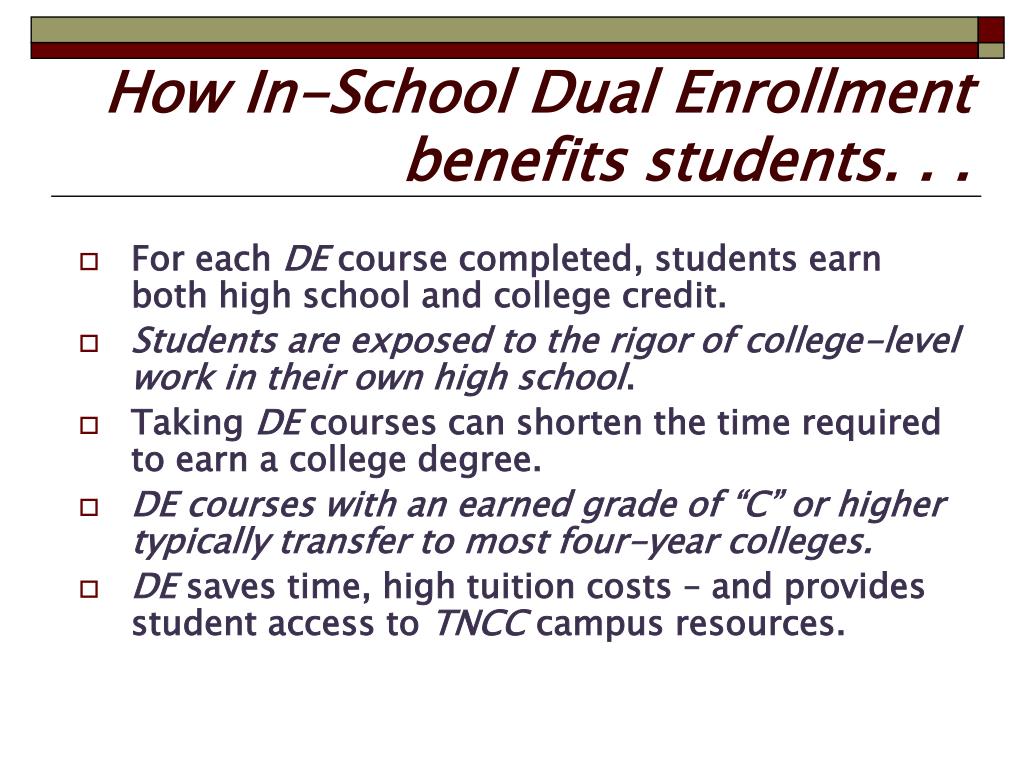
Dual enrollment has been gaining popularity among high school students as a way to earn college credits while still in high school. This program allows students to take college-level courses and receive both high school and college credit for those courses. Dual enrollment is an excellent opportunity for students who want to challenge themselves academically, get ahead in their college coursework, and save money on tuition costs.
The benefits of dual enrollment are numerous. Students who participate in this program have the opportunity to experience what it’s like to attend a college course while still receiving support from their high school teachers. They can also explore different majors or fields of study before committing to a particular career path. Additionally, earning college credits while still in high school can reduce the amount of time and money spent on post-secondary education.
Dual enrollment programs vary from state to state, but generally, students must meet certain criteria before they can enroll. For example, they may need to have a minimum GPA or standardized test score, be recommended by their guidance counselor or teacher, or pass a placement exam. The specific requirements often depend on the institution offering the dual enrollment courses.
One important consideration for students interested in dual enrollment is whether the credits earned will transfer to other colleges or universities. It’s crucial that students research which institutions accept these credits as transferable before enrolling in any courses. In some cases, colleges may only accept certain classes taken through dual enrollment programs.
Another factor worth considering is how taking dual enrollment classes will affect a student’s overall academic workload and extracurricular activities. Taking on too much at once could lead to burnout or reduced performance across all areas of life.
Despite these considerations, many experts agree that participating in dual enrollment programs can provide significant advantages for motivated students looking towards higher education goals after graduation from high school.
For families concerned about finances when it comes time for their child’s post-secondary education plans – including parents who do not qualify for financial aid or have limited resources – dual enrollment can be a good way to save money. Not only do students earn college credits at a reduced tuition rate, but they may also avoid having to take out student loans.
Dual enrollment courses generally require more work than typical high school classes, which is one of the reasons why it provides such an excellent preparation for college-level academics. Participating in these programs can help students develop skills like time management and self-discipline that will serve them well as they transition into higher education.
Overall, dual enrollment offers numerous benefits for motivated and ambitious high school students who want to get ahead in their academic career and prepare themselves for future success. With careful planning, research, and guidance from educators who specialize in counseling students about post-secondary options, participating in this program can be a valuable investment of time and effort towards long-term educational goals.
 Alternative Amie
Leave a comment