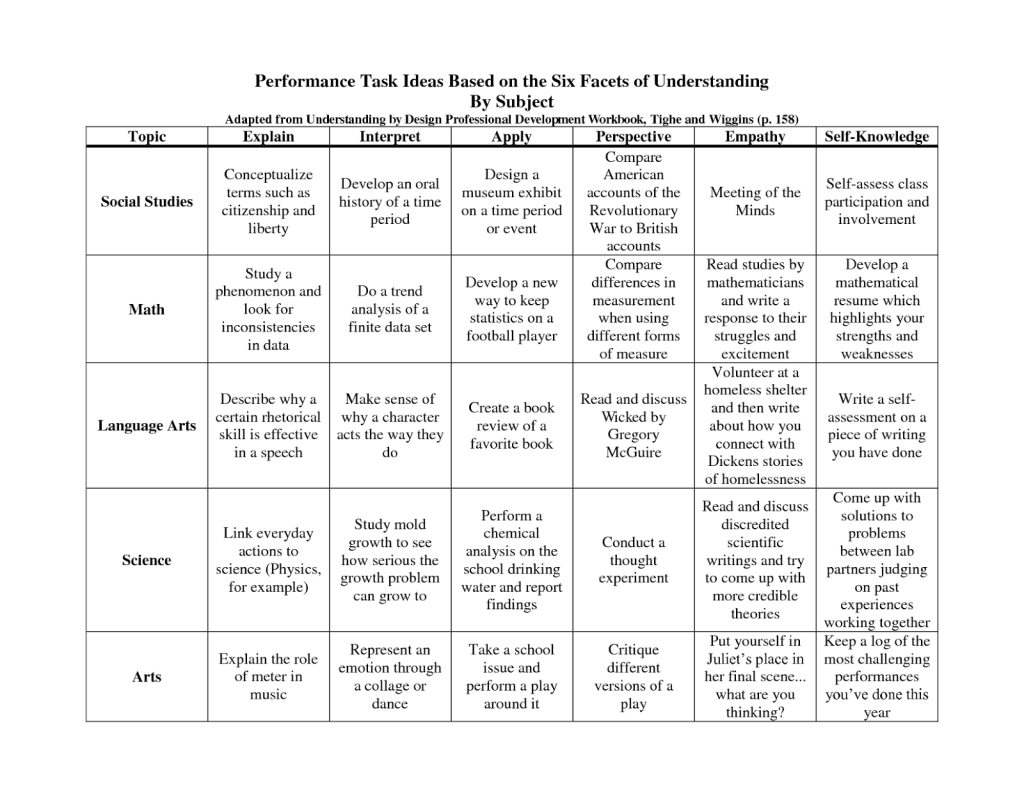
Performance tasks are an essential element of alternative schooling and education. Traditional classroom settings have long been criticized for their inability to cater to individual learning needs. In contrast, performance tasks offer a unique approach that emphasizes creativity, critical thinking, and real-life applications. Here are some reasons why incorporating performance tasks into the curriculum can be incredibly beneficial.
Firstly, performance tasks provide students with opportunities to apply what they have learned in real-world situations. Rather than relying on memorization and regurgitation of information, students get hands-on experience by working on projects that simulate actual scenarios. This method helps them develop problem-solving skills, boosting their confidence in dealing with challenges outside the classroom.
Secondly, performance tasks encourage collaboration among students. Unlike traditional teaching methods where students work independently on assignments or exams, these activities require individuals to work together towards a common goal. Collaborative efforts teach teamwork skills which will be useful throughout life.
Thirdly, since performance tasks rely heavily on the application of theoretical concepts instead of rote memorization and testing alone; teachers can assess student’s progress more accurately through these tools rather than just through exams or quizzes.
Fourthly, Performance-based assessments promote self-reflection and accountability amongst learners themselves as they prepare for their final presentation or submission of work products designed during project phases which helps them understand their strengths/weaknesses better while also making sure they stay engaged during the process.
Lastly and perhaps most importantly – performance-based assessment is fun! Students tend not only to enjoy completing these types of assignments but also tend to find it easier to engage with learning material when presented this way.
In conclusion – There’s no denying that traditional forms of education still have value; however integrating practical learning experiences like Performance Tasks into curriculums provides pupils an opportunity for authentic growth beyond book knowledge while providing educators insight into how best each child learns within a supportive environment promoting creativity while developing both cognitive & social/emotional skill sets needed later in life.
 Alternative Amie
Leave a comment