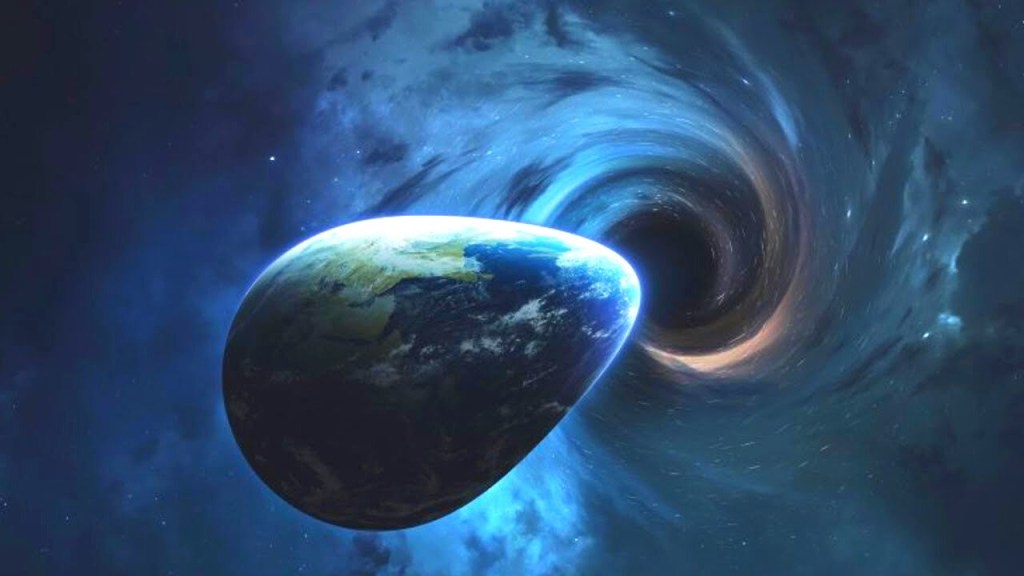
Astronomy and astrophysics have been crucial fields of study for centuries, shaping our understanding of the universe and our place in it. In this post, we will take a closer look at these fascinating subjects, exploring their history, key discoveries, and current developments.
History
Astronomy has been studied since ancient times when early civilizations observed the movements of celestial bodies to determine the seasons and predict natural events. The Babylonians were among the first to develop a mathematical system for predicting lunar eclipses over 2,500 years ago. Similarly, Ancient Egyptians used astronomical observations to create their calendar system.
In ancient Greece, astronomers such as Aristarchus proposed that Earth revolved around the Sun nearly two thousand years before Copernicus’ revolutionary heliocentric model emerged in 1543. Galileo’s telescopic discoveries during the Renaissance period helped cement this idea.
During the Enlightenment era in Europe (18th century), astronomy became more systematic with advances like William Herschel’s discovery of Uranus in 1781 using a telescope he built himself. Through detailed observations made by scientists like Herschel and others came new knowledge about planetary orbits and discovered many other celestial objects such as asteroids or comets which are still fundamental concepts today.
Astrophysics is an expansion upon traditional astronomy that examines not only celestial phenomena but also how matter behaves under extreme conditions such as high temperatures or strong gravitational forces. This field began on a larger scale during World War II when scientists researched nuclear reactions within stars to advance atomic weaponry development.
Key Discoveries
One significant discovery was Edwin Hubble’s confirmation that galaxies exist beyond our Milky Way galaxy nearly a hundred years ago; his work led to defining modern cosmology theory called “Big Bang” which posits that all matter originated from one point billions of years ago before expanding into its present state observable through telescopes today.
Other major findings include Stephen Hawking’s theoretical prediction that black holes emit radiation (now known as Hawking Radiation), and the discovery of exoplanets in our galaxy, which are planets that orbit stars outside of our solar system. The latter research is especially exciting since it suggests the possibility of habitable planets beyond Earth.
Current Developments
Today, astronomy and astrophysics continue to make significant strides. For example, astronomers have made great progress using ground- and space-based telescopes to study the evolution of galaxies over cosmic time. One high-profile endeavor is the Large Synoptic Survey Telescope (LSST) currently being constructed in Chile. This telescope will be able to survey enormous portions of the sky quickly and provide real-time data on celestial phenomena such as supernovas.
Another development worth mentioning is gravitational wave detection, a new field that emerged after scientists detected ripples in spacetime caused by colliding black holes or neutron stars using specialized detectors called LIGO/Virgo detectors.
Finally, machine learning algorithms are becoming increasingly prevalent within these fields due to their ability to analyze vast amounts of complex data quickly. These tools can help detect anomalies in astronomical observations or identify patterns that may provide insight into how different objects interact with one another.
Alternative Approaches
Traditionally, astronomy and astrophysics have been taught through lecture-style courses at universities for students pursuing scientific careers; however more alternative approaches exist today for those interested in learning about these subjects without committing to formal education programs or spending years studying them academically.
Online resources like Khan Academy offer free video lessons covering introductory-level topics from “What Is Astronomy” all the way up through advanced concepts like general relativity theory popularized by Albert Einstein. Similarly, many MOOCs (Massive Open Online Courses) hosted by top universities worldwide offer coursework available online for anyone interested – some even include live lectures with professors!
Another option could be attending summer camps focusing solely on astronomy; camps usually provide an excellent opportunity where students can explore the universe under the guidance of experienced astronomers.
Conclusion
Astronomy and astrophysics are fascinating fields that have been shaping our understanding of the universe for centuries. From ancient civilizations predicting eclipses to modern-day detections of gravitational waves, these subjects continue to make remarkable strides in scientific knowledge. With online resources, MOOCs, and summer camps available today, anyone interested can learn more about this exciting field – no matter their background or experience level.
 Alternative Amie
Leave a comment