Individualized Instruction: A Revolutionary Approach to Learning
Traditional classroom environments are often characterized by uniformity and conformity, with students receiving the same lessons at the same pace. However, this approach can leave many students behind as they struggle to keep up or become bored because they have already mastered the material. Individualized instruction is a revolutionary approach to learning that tailors education to each student’s needs, allowing them to progress at their own pace.
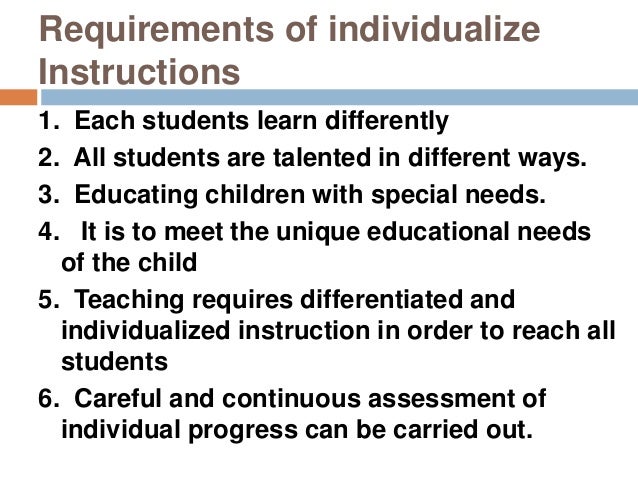
Individualized instruction is based on the premise that every child has unique strengths, weaknesses, interests, and learning styles. It recognizes that one-size-fits-all teaching methods cannot meet the diverse needs of today’s learners. Instead of forcing all students into a rigid curriculum framework, individualized instruction allows teachers to adapt their teaching style and materials based on each student’s individual profile.
The benefits of individualized instruction are manifold. By focusing on each student’s strengths and weaknesses, teachers can help students maximize their potential while also addressing their specific areas for improvement. Students who struggle in traditional classrooms may thrive under individualized instruction since it allows them more time and support for mastering challenging concepts.
Moreover, individualized instruction fosters independence in learning since students can take control over their education rather than being passive recipients of information. They can set goals for themselves and work towards achieving them in a way that suits them best – whether through visual aids or hands-on activities.
Individualized instruction does not necessarily mean one-to-one tutoring; it can be applied in group settings as well. Teachers use various techniques such as differentiated assignments or flexible grouping strategies where small groups work together on projects related to similar interests or abilities.
However, implementing an individualized approach requires significant planning and preparation from educators. Teachers need extensive knowledge about their students’ backgrounds, skills levels, interests so they can tailor lessons accordingly effectively. They must also create assessments customized for each student rather than relying solely on standardized tests.
In conclusion, Individualized Instruction offers an alternative to traditional education models that fail to address the diverse needs of today’s learners. The approach allows students to learn at their own pace, according to their strengths and interests, fostering independence in learning. While it requires careful planning and preparation by educators, individualized instruction can provide a more effective way for students to reach their full potential.
 Alternative Amie
Leave a comment