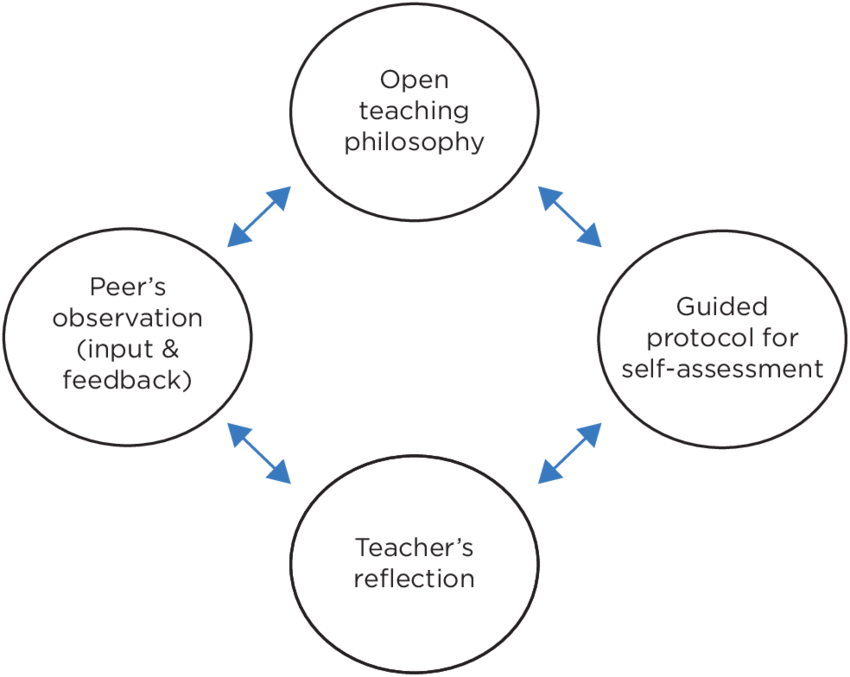
Dialectical method is a powerful tool of inquiry that has been used by philosophers, social scientists, and educators for centuries. It is a systematic approach to understanding complex issues by examining opposing viewpoints, analyzing contradictions and conflicts between them, and synthesizing new ideas from the resulting dialogue.
In education, dialectical method can be used to help students critically examine different perspectives on an issue or topic. This approach encourages students to think deeply about their own beliefs and assumptions, as well as those of others around them.
One of the fundamental principles behind dialectical method is that everything exists in relation to other things. In other words, nothing exists in isolation; everything is interconnected with something else. The process of dialectical inquiry involves identifying these relationships and exploring how they shape our understanding of the world.
Dialectical thinking emphasizes the importance of considering multiple perspectives on any given issue or problem. By doing so, we can gain a more complete picture of the situation at hand and avoid falling into narrow-minded thinking patterns.
The basic steps involved in using dialectical method are as follows:
1. Identify two opposing viewpoints: To begin with, it’s important to identify two contrasting views on an issue or topic. These views should be sufficiently different from one another so that they provide distinct points of departure for analysis.
2. Analyze each viewpoint separately: Once you have identified the two opposing viewpoints, take some time to analyze each one individually. What are its strengths? Its weaknesses? What underlying assumptions does it make?
3. Identify contradictions between the viewpoints: Next, look for areas where the two viewpoints contradict each other. For example, one viewpoint might suggest that technology is beneficial for society while another argues that it has harmful effects.
4. Synthesize a new perspective: Finally, use your analysis to develop a new perspective that incorporates elements from both original viewpoints while also addressing their contradictions.
There are many ways in which dialectical thinking can be applied to education. For example, it can be used in classroom discussions to explore complex issues and encourage critical thinking. By challenging students to consider multiple perspectives on a given topic, teachers can help them develop a more nuanced understanding of the world around them.
Another way in which dialectical method can be applied is through project-based learning. In this approach, students are presented with a real-world problem or challenge and are asked to work together to find a solution that incorporates various viewpoints and perspectives.
Beyond its applications in education, dialectical thinking has been used extensively in philosophy and social science. One of the most famous examples of this is the work of German philosopher Georg Wilhelm Friedrich Hegel.
Hegel’s dialectical method involves three stages: thesis, antithesis, and synthesis. The thesis represents an initial idea or position; the antithesis represents its opposite; and the synthesis represents a new perspective that incorporates elements from both original positions.
This same three-stage process can be seen in many other areas as well. For example, evolutionary theory suggests that living organisms evolve through a process of natural selection (thesis), which leads to variations within species (antithesis), ultimately resulting in new species over time (synthesis).
In conclusion, dialectical method offers educators a powerful tool for helping students develop their critical thinking skills by encouraging them to examine multiple perspectives on an issue or problem. By using this approach, teachers can help students gain a deeper understanding of complex topics while also fostering empathy and tolerance for different viewpoints.
Whether applied in philosophy or education, dialectical thinking remains one of the most important tools available for exploring complex issues and arriving at new levels of insight and understanding.
 Alternative Amie
Leave a comment