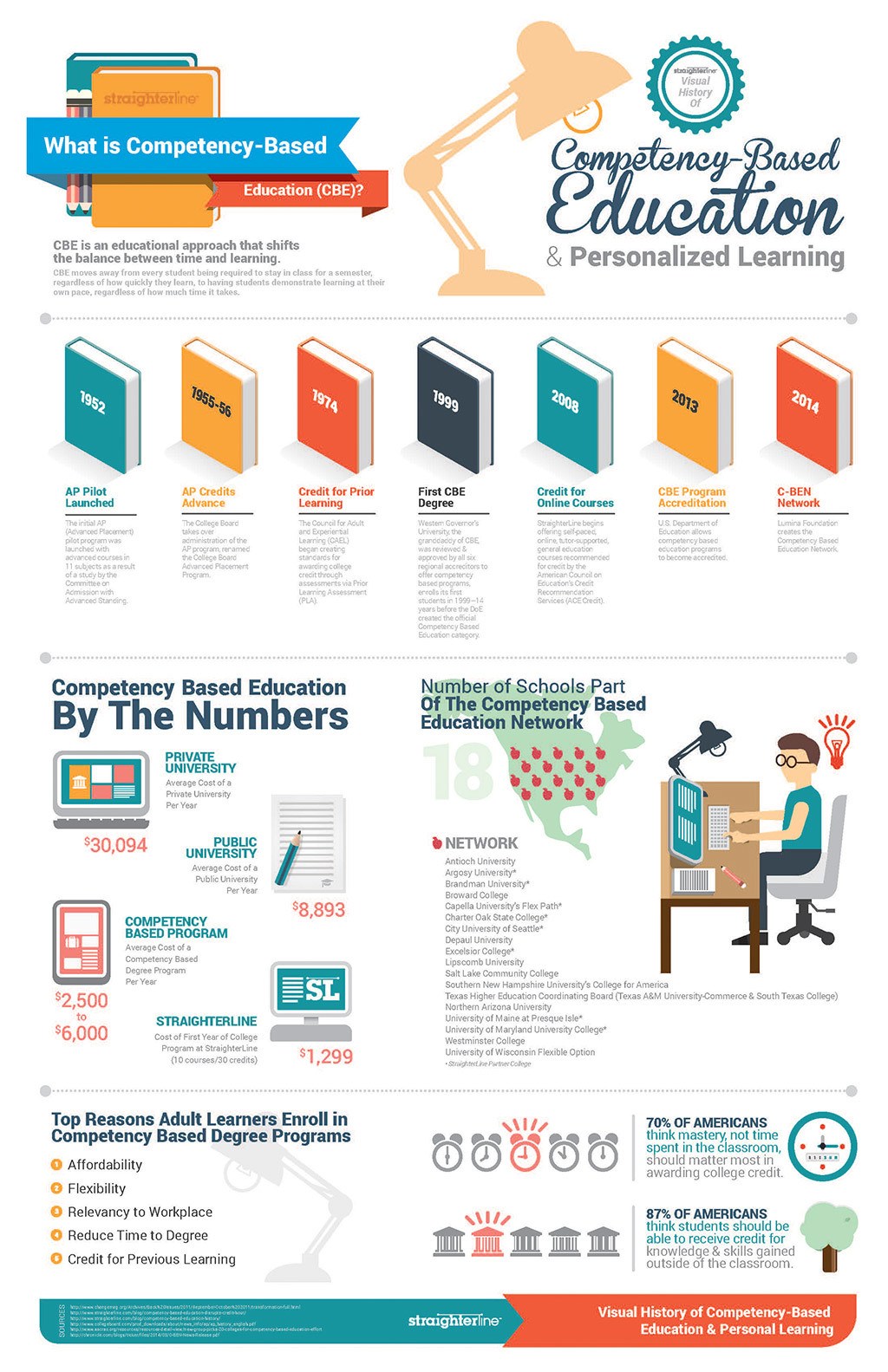
Competency-based education (CBE) has become a buzzword in the world of education. It is an innovative approach that focuses on students’ mastery of skills and knowledge rather than the traditional methods that rely solely on grades or time spent in a classroom.
The goal of competency-based education is to ensure that students have mastered specific skills, which they can apply in real-world situations. This approach helps students better understand their areas of strength and weakness while also allowing educators to provide targeted instruction based on individual needs.
The concept of CBE has been around for decades, but it wasn’t until recently that it gained traction as a viable alternative to traditional learning models. As more schools adopt this approach, it’s important to understand what exactly competency-based education entails and how it differs from other educational models.
One key feature of CBE is its emphasis on personalized learning. Rather than teaching to the middle or catering only to high-achieving students, teachers using this model focus on each student’s unique strengths and weaknesses. They identify areas where students need additional support and tailor instruction accordingly.
This individualized approach means that progress is measured not by time spent in class but by mastery of specific skills. Students advance at their own pace, moving onto more challenging concepts once they have demonstrated proficiency in foundational ones.
Another hallmark of CBE is its emphasis on project-based learning. This type of learning allows students to apply what they learn through hands-on projects rather than simply regurgitating information for tests. Projects are designed with real-world applications in mind so that students can see the practical value of what they’re learning.
In addition to personalized learning and project-based approaches, another key aspect of CBE is assessment practices. In traditional educational models, assessments are often used as tools for grading rather than as ways to gauge true understanding or mastery.
With competency-based education, however, assessments are used differently: they allow educators to measure each student’s level of mastery in specific subject areas. This approach makes it easier for both students and teachers to identify where additional instruction or support is needed.
One potential challenge of CBE is that it requires a significant amount of planning and coordination on the part of educators. Unlike traditional models, which rely heavily on textbooks and standardized curricula, CBE requires teachers to create individualized plans for each student based on their strengths and weaknesses.
In addition, because students progress at their own pace rather than moving through a curriculum as a group, it can be difficult to ensure that all students are mastering the same skills at roughly the same time. This can make it challenging for schools using this model to meet certain benchmarks or standards.
Despite these challenges, many schools have successfully implemented CBE with positive results. Students who learn through this model report feeling more engaged in their learning and better equipped to apply what they’ve learned beyond the classroom.
Parents also report seeing improvements in their children’s academic performance as well as increased confidence and motivation. Moreover, when combined with technology solutions such as AI-powered adaptive learning platforms like CentroLearn Analytics for Education platform (C.A.F.E), which integrates analytics into competency-based education programs by providing personalized feedback about student’s comprehension levels so they can receive targeted support if necessary – there is no limit to how much improvement we could potentially see!
Overall, competency-based education offers an exciting alternative to traditional educational models that emphasizes individualized learning, real-world applications of knowledge, and assessments focused on mastery rather than grades or test scores. While implementing this approach may present some logistical challenges for schools and educators, its potential benefits make it worth considering as a viable option for modern education systems around the globe.
 Alternative Amie
Leave a comment