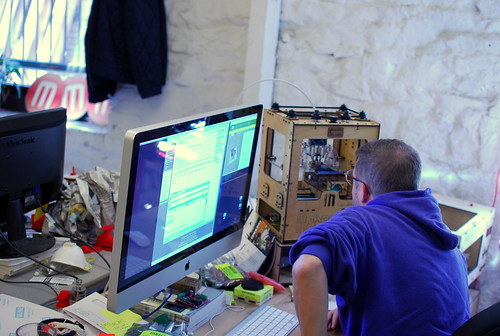
3D printing, also known as additive manufacturing, is a relatively new technology that has been gaining popularity in recent years. It involves the creation of three-dimensional objects by adding material layer by layer until the desired shape is achieved. While 3D printing has numerous applications in various industries like medicine and architecture, it has also caught the attention of educators and students for its potential to revolutionize education.
One of the most significant advantages of 3D printing in education is its ability to provide hands-on learning experiences. With 3D printers, students can design and create physical models of their ideas or concepts instead of merely reading about them in textbooks. This approach not only makes learning more engaging but also helps develop critical thinking skills as students explore different iterations and variations.
Another benefit is that 3D printing enables personalized learning. Students with different learning styles can benefit from this technology because they can design and create objects that cater to their unique needs or interests. For instance, a student who struggles with visualizing geometric shapes can print out three-dimensional representations to help them understand better.
Moreover, 3D printing enhances creativity and innovation among students. The process allows learners to experiment with designs without limitations on materials or tools needed for prototyping traditional manufacturing methods require significantly more resources than additive manufacturing.
One application where 3D printers have found great success is STEM (science, technology, engineering, and mathematics) education. The technology provides an opportunity for students to explore complex concepts practically while developing technical skills such as computer-aided design (CAD) modeling software proficiency.
However, there are some challenges associated with integrating 3D printing into alternative schooling systems effectively. One major hurdle is cost; many schools may not have access to high-quality machines due to financial constraints resulting from budget cuts or limited funding opportunities.
Another challenge relates to teacher training; instructors may need specialized training before using these technologies effectively in classrooms since equipment maintenance requires expertise beyond the average educator’s knowledge.
Lastly, concerns about the potential for 3D printing to perpetuate or exacerbate inequalities exist. As with any technology, there is a risk of access and skill gaps that can lead to some students being left behind while others excel in using it.
In conclusion, 3D printing has enormous potential in education. It provides hands-on learning experiences, personalized learning opportunities, enhances creativity and innovation, and supplements STEM curricula effectively. However, its full integration into alternative schooling systems comes with challenges that must be addressed before widespread adoption occurs.
 Alternative Amie
Leave a comment